
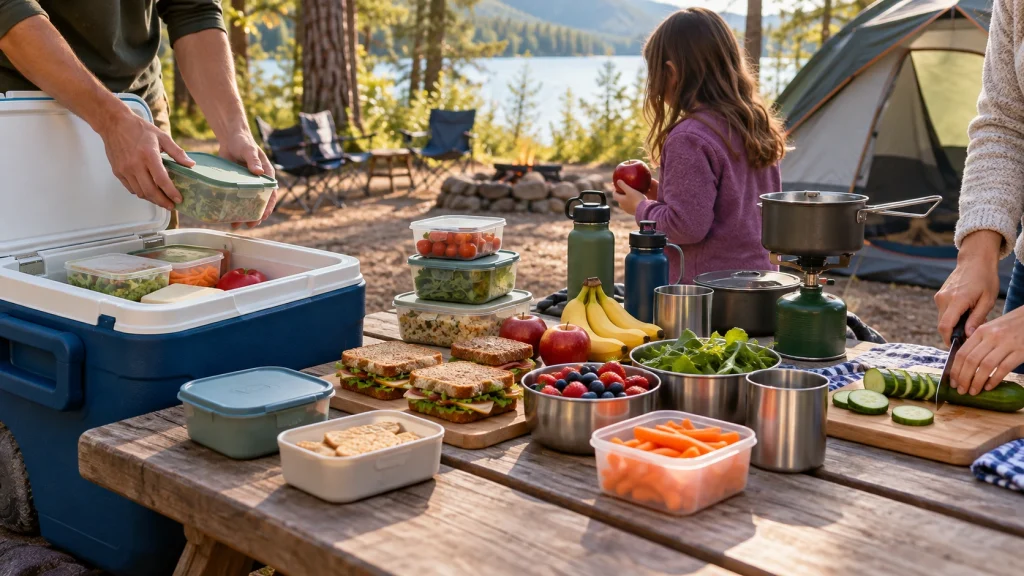
Packing food for a camping holiday seems straightforward until dinner depends on an ingredient left at home, or the cooler is too full to close properly. A good camping food plan has to account for the journey, the way you will cook, and the time you want to spend away from your pitch. Avoiding a few common mistakes makes meals easier and helps prevent waste.
Packing meals without planning when you will eat them
A bag of groceries is not quite a meal plan. Before shopping, sketch out breakfasts, lunches, dinners, and snacks for each day. Think about when you will arrive, whether you expect to cook that evening, and which days you will be out exploring. This gives every perishable item a purpose and shows where a simple meal would be more useful than an ambitious recipe.
For example, if a family expects to arrive late, packing ingredients for a meal that needs chopping, several pans and a long cooking time creates work just when everyone is tired. Sandwiches or a prepared dish that can be served easily may suit that first evening better. Save the more involved cooking for a day with room in the schedule.
Assuming the cooking facilities will suit every recipe
A familiar meal at home may be awkward on a campsite. Check what cooking equipment you will bring and what facilities are available before choosing recipes. A pan that works on your home hob may be too large for a compact camping stove; a dish that needs an oven is a poor choice if you have no access to one.
If you are using a shared guest kitchen, plan for other guests to need it too. At some campsites, camping guests have access to a guest kitchen with ovens, but that does not make every meal equally convenient. Food that needs only brief preparation gives you more flexibility than a menu built around long cooking sessions. Pack the utensils each meal requires, including a knife, chopping board, can opener, or food container where needed.
Treating the cooler as unlimited storage
Cold storage deserves its own plan. A cooler is useful for travel and short periods, but how well it keeps food cold depends on its design, how it is packed, the outdoor temperature, and how often it is opened. Do not assume that every item will remain suitably chilled throughout a long trip. If you have a fridge, check that your food will fit and that you can use it when you need it.
Pack foods that need chilling together and keep them out of direct sun. Use well-sealed containers so melted ice or leaks cannot reach other food. Put items for the first meal where you can reach them without unpacking everything. If you cannot keep a perishable food properly cold, choose a different ingredient or buy it closer to the day you will eat it.
Bringing too much fresh food at once
It is tempting to shop for the whole holiday before leaving home. That can mean crushed fruit, tired vegetables and more fresh food than your storage can handle. Plan the first few meals in detail, then decide which supplies can be bought later. A grocery store near the campsite may make a smaller initial shop practical for guests staying there.
Consider how ingredients overlap. A packet of wraps used for one lunch and another simple meal is easier to manage than several partly used packs of bread. Choose sturdier produce for later in the trip and eat more delicate items earlier. Keep a small supply of shelf-stable foods in case plans change, but avoid packing so many extras that you lose track of what you brought.
Forgetting food for the hours between meals
Camping days rarely run exactly to schedule. A trip to the beach or an outing with children can stretch past the time you expected to eat. If all the food is back at the pitch and needs cooking, hunger can turn a pleasant day into a rushed return.
Pack portable snacks and a lunch you can assemble without a full kitchen. Fruit that travels well, crackers, and foods that do not require chilling can be useful choices. For anything perishable, bring suitable cold storage and eat it within the conditions you can safely maintain. Also plan drinking water for travel and activities rather than treating it as an afterthought.
Packing food but leaving out the small essentials
A meal plan can fail over a missing opener, cooking oil, or way to store leftovers. As you plan each meal, picture the steps from opening the ingredients to cleaning up. This catches gaps that a general packing list may miss.
A short kitchen checklist might include:
- The cooking equipment and utensils your chosen meals require
- Plates, cups and cutlery for everyone
- Sealed containers or bags for opened food and leftovers
- Supplies for washing up and dealing with food waste
- Seasonings and small ingredients that appear in several meals
Pack these together where you can find them. After arrival, separate food from cleaning supplies and keep opened packages secure. For more detailed information on this topic, read our guide on How to Plan a Family Camping Arrival With Children and Luggage.
Choosing complicated meals for every day
Cooking can be part of the pleasure of a camping holiday, but every meal need not be a project. Consider the balance between meals you want to make from scratch and meals that leave more time for swimming, walking or simply relaxing. If you intend to eat at a restaurant on one evening, include that in the plan so you do not also bring a dinner that may go unused.
The most useful packing list follows your actual itinerary. Match meals to the equipment and storage you have, buy fresh ingredients when you can use them, and keep a few easy options for changes of plan. You will spend less time managing groceries and more time enjoying the holiday.