
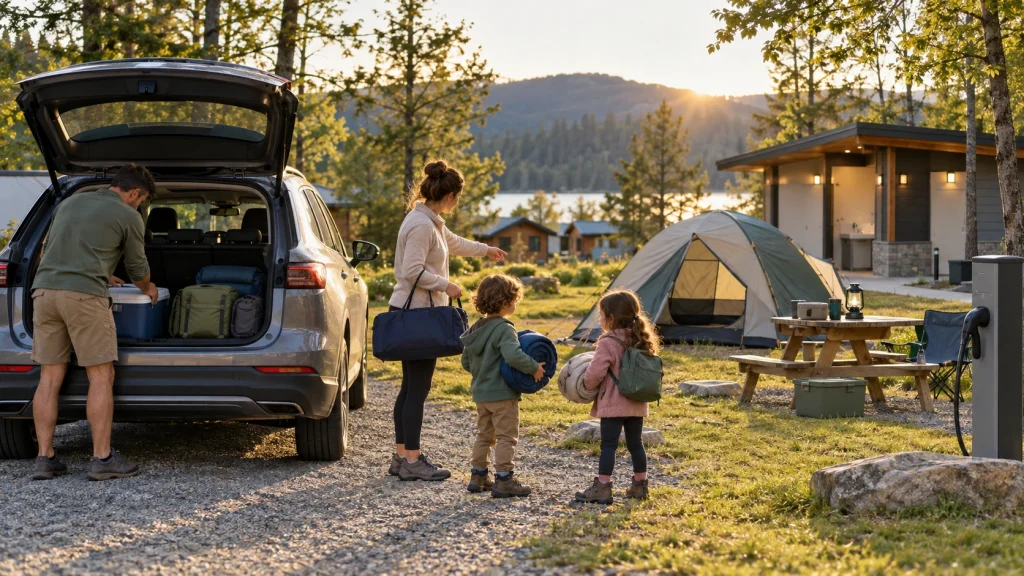
Arriving at a campsite with children and luggage is easier when everyone knows what happens before the car door opens. The first few minutes may involve finding your pitch, checking in, keeping children close and unloading enough gear to settle in. A simple family camping arrival plan helps you handle those jobs in a sensible order, especially if you arrive tired or after reception closes.
Check the arrival details before you travel
Keep your booking confirmation somewhere you can reach without unpacking. Check the arrival window, the address, your accommodation type and any instructions for entering the campsite. If you have booked a pitch, confirm what you know about its size and location, but be prepared to follow the site’s directions on arrival.
At some campsites, guests can use a self check-in machine outside reception opening hours, including for advance bookings and drop-in stays. Check how to find your pitch and where you may park while you sort out check-in; those details matter more when children are ready for bed.
If you are towing a caravan or driving a motorhome, think through the final approach as well as the journey itself. Save the campsite address and arrival instructions offline in case your connection is poor.
Pack for the first hour, not just the whole holiday
A carefully packed car can still be awkward if the item you need first is beneath every suitcase. Put arrival essentials in one small bag or accessible section of the vehicle.
Useful first-hour items include:
- Booking details, phone and charger
- Water, simple snacks and any medicine needed during the journey
- Weather-appropriate layers and shoes
- Nappies or other changing supplies, if relevant
- Torches and sleep items for a late arrival
- A small bag for rubbish or wet clothes
Keep children’s comfort items particularly easy to find. If a young child needs a familiar blanket to settle, it should not be buried with the tent equipment. For tent camping, group the shelter, pegs and essential bedding so you can set up before unpacking cooking gear or toys.
Give each adult a clear first job
Decide who will handle check-in and who will stay with the children and luggage. If you are travelling alone with children, keep them with you for check-in and leave the main unloading until you reach your pitch or accommodation.
Explain the arrival plan to children in simple terms before you get there: first you park, then you find your place, then they can explore with an adult. Younger children may need a specific task, such as holding their own small backpack. Older children can help carry light items, but give them a clear boundary around vehicles and unfamiliar pitches.
For example, a family arriving near bedtime might have one adult take the children to the toilets while the other brings out bedding and sets up the sleeping area. That sequence meets the most urgent needs first. It also keeps the group from spreading luggage across a pitch while everyone is tired.
Unload in the order you will use things
Once you know where to go, take a moment to look at the pitch or cabin entrance before opening the boot. Choose a spot for bags that leaves the path clear. At a tent pitch, position the tent before unloading every box; moving a pile of luggage twice is frustrating and can delay setup. With a caravan or motorhome, park and settle the vehicle before children begin carrying equipment around it.
Bring out shelter or access items first, followed by sleeping supplies, toiletries and a change of clothes. Food and activity gear can wait until the family has somewhere to sit and rest. If rain is likely, keep bedding protected while you put up the tent. A waterproof bag or an accessible dry area in the vehicle can make a damp arrival much easier to manage.
Avoid sending children to the playground immediately while adults are still locating facilities and moving vehicles. Some campsites give families access to playground activities and a nearby beach, but it helps to agree when and with whom children may go. A short walk together after setup lets everyone learn the route back.
Locate the facilities you will need first
After check-in, identify the nearest toilets, showers, and water access before unpacking for the evening. If you plan to use a guest kitchen or laundry, check where those facilities are and how access works. Some campsites have sanitary buildings, laundry facilities and a guest kitchen with ovens; access cards for facilities may be issued at reception. If your arrival falls outside reception hours, plan around what you can access immediately and ask about any remaining arrangements when reception opens.
Check the site’s rules before connecting equipment or arranging your pitch. Some campsites provide electricity at pitches, but electric vehicles may not be charged from pitch power posts or cabins. If you are travelling in an electric car, make a separate charging plan rather than assuming campsite power will cover it.
For more detailed information on this topic, read our guide on How to Plan a Fun and Relaxing Camping Holiday with Children.
Leave room for a slower evening
Try not to make the first evening depend on a full campsite setup, a complicated meal and an outing. A simple dinner, basic wash and familiar bedtime routine give children time to adjust to new surroundings. If you have booked a cabin, you may be able to settle more quickly, but it still helps to find essential items before bringing in every bag.
A good arrival plan is flexible: check the site information, keep the first-hour bag close, assign the immediate tasks, and unpack according to what your family needs next. Once everyone knows where to sleep and where the toilets are, the rest of the luggage can wait.